


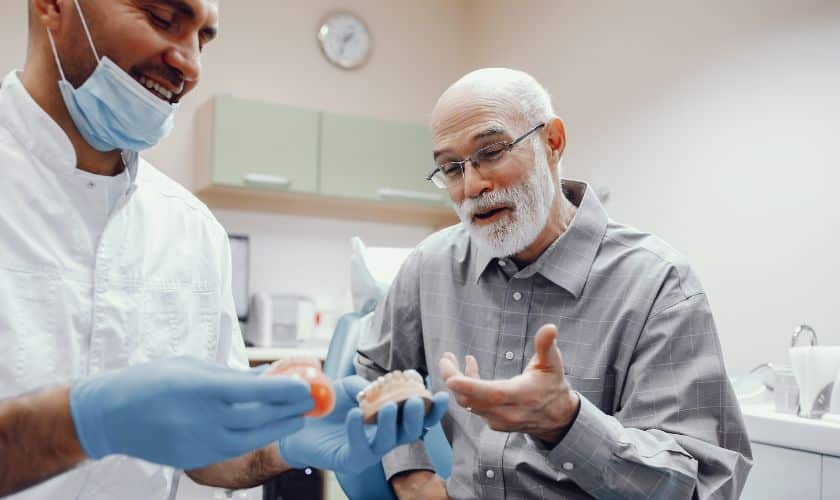
Are you tired of dealing with missing teeth or ill-fitting dentures? You’re not alone. Millions of people worldwide struggle with the same issues, affecting their confidence and quality of life. Fortunately, dental technology has come a long way to provide solutions for these problems. Two popular options are implant dentures and traditional dentures. In this blog post, we’ll explore the differences between the two and help you determine which one may be right for you. So sit back, relax, and let’s dive in!
What Are Dental Implants?
Dental implants are artificial tooth roots that serve as a base for replacement teeth or bridges. They’re made of titanium and other materials that are compatible with your body, making them a safe and durable option for tooth restoration.
To begin the process, your dentist will place the implant into your jawbone, where it fuses with the bone over time to create a strong foundation for your new teeth. Once the implant has fully integrated with your jawbone, an abutment is placed on top of it to support the final restoration.
Denture implants offer several benefits over traditional dentures. For one, they provide a more permanent solution since they fuse directly to your jawbone rather than relying on suction or adhesive like traditional dentures. Additionally, they look and feel much more natural because they mimic real teeth in both function and appearance.
While dental implants may be more expensive than traditional dentures upfront, their longevity often makes them worth the investment in the long run.
How Do Dental Implants Work?
Dental implants are a popular and effective solution for replacing missing teeth. The process of getting dental implants involves the surgical placement of a small titanium post into the jawbone.
Once inserted, the implant fuses with the bone over time in a process called osseointegration. This creates a strong foundation for an artificial tooth or crown to be attached on top.
The implant itself acts as an artificial tooth root, providing stability and support for the replacement tooth. Unlike traditional dentures that sit on top of the gums, dental implants are secured firmly within the jawbone.
This means that they function just like natural teeth, allowing you to eat, speak and smile confidently without worrying about them slipping out of place.
Dental implants also help to prevent further bone loss in your jaw by stimulating natural bone growth through chewing pressure. This can help maintain your facial structure and prevent premature aging caused by missing teeth.
Dental implants offer a long-term solution for restoring your smile and improving your oral health.
What Are Traditional Dentures?
Traditional dentures are removable replacements for missing teeth and surrounding tissues. They consist of a gum-colored base made of acrylic resin or porcelain, on which artificial teeth made from various materials such as ceramics, acrylics, or metals are attached. Traditional dentures can be full or partial, depending on the number of teeth that need to be replaced.
To make traditional dentures, the dentist will take impressions of your mouth to create a custom-fit mold for your replacement teeth. The process involves several visits and adjustments until you achieve maximum comfort and fit. Once in place, traditional dentures rely on suction and adhesive creams to stay put inside the mouth.
One downside to traditional dentures is their tendency to slip out while eating or speaking since they rest atop the gums’ surface without any underlying support. This often leads to discomfort and embarrassment for patients wearing them, but can be avoided with regular maintenance by dental professionals.
Traditional dentures remain a popular option for those who have lost one tooth or an entire arch due to injury or decay. With proper care and attention from both patient and dental professional alike, these prosthetic devices can provide satisfactory results at an affordable cost compared with other options available today.
How Do Traditional Dentures Work?
Traditional dentures are removable prosthetic devices that replace missing teeth and surrounding tissue. They are typically made of acrylic resin, porcelain, or a combination of both materials. Dentures sit on the gums and can be easily removed for cleaning.
The process of getting traditional dentures starts with taking impressions of the patient’s mouth to create a model. This model is used to make wax replicas of the denture so that the dentist can check the fit and appearance.
Once the dentist has approved the wax models, they are sent to a dental laboratory where they will be cast in either acrylic resin or porcelain. The finished denture is then adjusted by your dentist for proper fit and comfort.
Traditional dentures rely on suction between the appliance and gums to stay in place. This means that people with ill-fitting or loose dentures may experience discomfort, difficulty speaking or eating, as well as sore spots inside their mouths.
Traditional dentures remain an affordable option for those seeking replacement teeth but require diligent care and maintenance over time.
The Difference Between Dental Implants And Traditional Dentures
Dental implants and traditional dentures are two very different options for replacing missing teeth. Dental implants involve surgically placing a small titanium post into the jawbone, which then fuses with the bone over time, creating a sturdy base for a replacement tooth. Traditional dentures, on the other hand, are removable prosthetic devices that sit on top of the gums.
One key difference between dental implants and traditional dentures is their permanence. Dental implants are meant to be permanent fixtures in your mouth, while traditional dentures can be removed at any time. This means that dental implant patients can enjoy more natural-looking teeth without worrying about slippage or accidental removal.
Another significant difference is in how they feel when worn. Many people find that dental implants offer greater comfort and stability than traditional dentures because they mimic natural teeth more closely. Patients often report feeling like they have their own natural teeth again after getting dental implants.
There is also a price difference between these two options. While both dental implants and traditional dentures can be expensive upfront costs vary depending on individual needs as well as material choices made by the dentist and patient alike.
It’s important to weigh all of these factors carefully before making a decision about whether to get dental implants or traditional dentures – ultimately, it comes down to personal preference!
The Bottom Line
To summarize, dental implants and traditional dentures are both effective solutions for missing teeth. Dental implants offer a more permanent solution with better comfort and natural-looking results, while traditional dentures are often more affordable and easier to remove for cleaning.
Ultimately, the choice between dental implants and traditional dentures will depend on individual needs, budget, and preferences. Consulting with a dentist is highly recommended to determine the best option for your specific situation.
No matter which option you choose, restoring missing teeth can improve your overall oral health as well as boost your confidence in your smile. So don’t hesitate to explore these options if you’re dealing with tooth loss – it’s worth it!
**Disclaimer: This content should not be considered medical advice and does not imply a doctor-patient relationship.